In this guide
Exploring the world through a talking globe can spark curiosity, build geography skills, and inspire lifelong learning. The following picks are among the best talking globes for kids, offering interactive features, audio questions, and engaging learning modes to suit different ages and interests. This guide compares top models to help you choose the right globe for classroom use, homeschooling, or gift giving.
| Product | Brand | Key Benefit |
|---|---|---|
| Little Experimenter Interactive 9” Globe | Little Experimenter | Real-time facts with smart pen |
| Educational Insights GeoSafari Jr. Talking Globe | Educational Insights | 200+ facts; kid-friendly quiz |
| LeapFrog LeapGlobe | LeapFrog | 48 touch points; multi-language |
| PlayShifu Orboot Earth | Shifu | AR-powered exploration; 1000+ facts |
| Replogle Intelliglobe | Replogle | Interactive globe with pen and book |
Little Experimenter Interactive 9” Globe

The Little Experimenter globe introduces kids to world geography with an interactive smart pen. When the pen touches a country or location, it delivers voice information through a built-in speaker, enabling hands-on learning. The globe includes about 300 trivia questions to challenge memory and comprehension, covering capitals, currencies, climates, and more. It supports early learning and encourages curiosity through real-time responses and engaging prompts.
Educational Insights GeoSafari Jr. Talking Globe
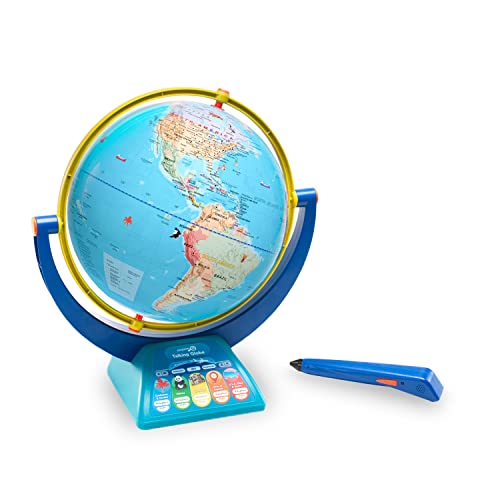
This globe features Wildlife Warrior Bindi Irwin and offers over 1,000 fun facts and quiz questions. By touching the smart pen, kids can explore distances, animals, oceans, continents, and cities. It’s designed to support STEM learning, making it suitable for classrooms and at-home education alike. The interactive elements help children connect geography to biology, ecosystems, and global cultures, fostering curiosity and critical thinking.
LeapFrog LeapGlobe

The LeapGlobe offers 48 touch points across four language-enabled modes. Children can explore landmarks, animals, greetings in multiple languages, foods, and more. It combines tactile interaction with auditory content, helping early readers develop vocabulary and geography knowledge. The multi-mode design supports independent play and guided learning, making it a versatile option for homes and classrooms.
PlayShifu Orboot Earth

Orboot Earth is an AR-powered globe that requires a companion app. It displays 400+ wonders and 1,000+ facts. The device comes with a smart stylus, passport, sticker book, and other accessories. A constellation mode lights up the sky on the globe, synchronizing with the app to provide a dynamic learning experience. It’s ideal for tech-forward classrooms and curious young explorers who enjoy digital-physical blending.
Replogle Intelliglobe
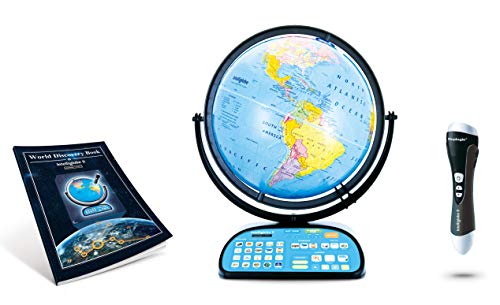
The Intelliglobe combines a rechargeable pen with an accompanying World Discovery Book, offering narrated facts in English and a broad set of topics—ranging from national anthems to world records. It includes multiple challenges and trivia to test knowledge, making it a strong option for extended learning sessions, group activities, and homeschool curricula.
Buying Guide
- Age compatibility: Choose a globe aligned with the child’s age and reading level. More advanced models offer extensive facts and complex quizzes, while simpler devices emphasize core geography basics.
- Interactivity type: Some globes use a dedicated pen with voice responses, others rely on companion apps or built-in speakers. Consider the preferred learning style—tactile touch, spoken word, or AR-enabled experiences.
- Content breadth: Look for a globe with diverse topics such as capitals, cultures, languages, landmarks, ecosystems, and current events. A broader library supports interdisciplinary learning.
- Language options: If multilingual exposure matters, verify the number of languages and pronunciation quality. Some models offer English plus several additional languages.
- Durability and age range: For younger children, robust builds and rounded edges are important. Check for safety certifications and age recommendations on the box.
- Accessories and expandability: Some sets include styluses, cases, passports, and activity books. Assess whether you want AR features or purely physical interactive play.
- Classroom vs. home use: Classroom globes often feature more robust content and durability, plus teacher-friendly modes, while home models emphasize family-friendly activities and storytelling.
- Power and portability: Rechargeable pens and USB-powered modules simplify setup. Consider battery life if you plan to use the globe away from outlets.
When selecting the best talking globe for a child, balance content depth with ease of use, ensuring the device remains engaging without being overwhelming. AR-enabled options can provide immersive experiences, while pen-based or voice-enabled models offer straightforward, screen-free learning. By evaluating age, learning goals, and preferred learning style, you can identify a globe that supports geography literacy and global awareness over time.