In this guide
Discover top building projects that engage 12-year-olds in hands-on science, technology, engineering, and math. The following kits help young makers explore solar power, electronics, robotics, and creative problem-solving while promoting learning through play. Each selection includes clear instructions, safe materials, and real-world mini-projects that support curiosity and independent thinking.
Summary Table
| Product | Brand | Key Focus | Amazon Link |
|---|---|---|---|
| SCAEMO STEM Kits | SCAEMO | Solar car, solar plane, wind car, electric fan | View |
| choopheme Stem Projects | choopheme | Bluetooth speaker and FM radio DIY electronics | View |
| Bottleboom STEM 13-in-1 | Bottleboom | 13 robot builds with solar or battery power | View |
| COBFDHA STEM Projects | COBFDHA | 6 moving robots powered by sun or battery | View |
| Poraxy Bluetooth Speaker Kit | Poraxy | Build Bluetooth speaker and FM radio | View |
STEM Kits for Kids Ages 8-10-12-14

These four-in-one kits include a solar powered car, a solar powered plane, a wind powered car, and an electric fan. Each component is individually packaged to encourage step-by-step assembly and learning. The activity naturally supports family involvement and collaborative problem-solving, making it a strong option for group projects or science fairs. The packaging emphasizes gifts for ages 8-12 and appeals to budding inventors seeking tangible, evidence-based outcomes.
Stem Projects Toys for Boys 8-12

This kit features two primary projects: a DIY Bluetooth speaker and a FM radio, with a simple assembly process that uses a small screwdriver. It emphasizes easy-to-follow instructions and an engaging build that boosts confidence in STEM concepts. The set is positioned as suitable for ages 8-13 and supports hands-on experimentation, making it ideal for ongoing science curiosity and family bonding.
STEM 13-in-1 Solar Power Robots

Follow a step-by-step manual to build 13 different robots using split and reassembled parts. The kit demonstrates mechanical principles through land and water motion, with solar and battery power options. Made from non-toxic ABS materials, it emphasizes safety and long-lasting play. The product encourages learning through experimentation, problem-solving, and iterative design, making it a comprehensive STEM experience for ages 8-12.
COBFDHA STEM Projects For Kids
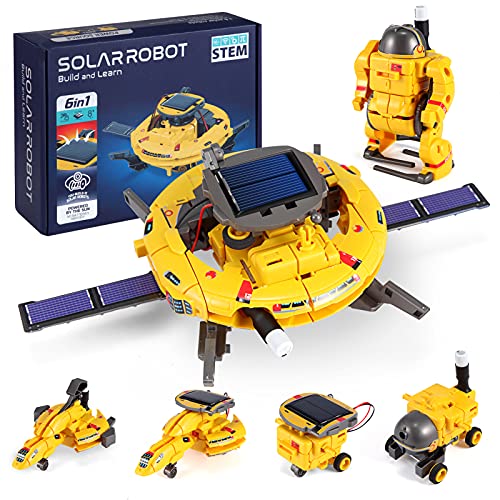
This kit includes six different building robots designed to move on land. It introduces solar power and battery operation, enabling indoors or outdoors use. The project supports imagination and creative thinking while focusing on manual dexterity and problem-solving. It’s marketed as a strong gift option for ages 8-14 and helps kids explore energy sources and robotics in an age-appropriate, hands-on way.
Poraxy Science Kits For Kids

This set invites kids to build a Bluetooth speaker and FM radio, with 3D wooden puzzles crafted from non-toxic plywood. Each kit is individually packaged for straightforward assembly, making it an appealing option for 8-12 year olds who enjoy hands-on electronics and DIY projects. The kit is designed as an engaging, reusable gift and supports learning by doing, from basic circuits to sound production.
Buying Guide
- Age appropriateness: Choose kits labeled for ages 8-12 or 9-14 to ensure the challenge level aligns with a 12-year-old’s capabilities.
- Learning focus: Decide whether the priority is solar energy experiments, electronics assembly, or robotics. Some kits emphasize teamwork, while others are solo projects.
- Safety and materials: Look for non-toxic components, smooth edges, and child-friendly tools. ABS plastics and laser-cut wood are common safe materials.
- Complexity and instructions: Assembly-friendly kits with clear step-by-step manuals reduce frustration and promote sustained engagement.
- Growth potential: Kits that can be expanded or reassembled into multiple projects extend learning beyond a single activity.
- Power source: Solar-powered kits teach renewable energy concepts, while battery-powered options allow indoor experimentation during bad weather.
- Educational value: Prefer kits that explain the science behind the build, often with a focus on problem-solving, critical thinking, and design iteration.
- Set versus standalone: Multi-project sets offer variety and repeated use, whereas a single project may require additional purchases for continued play.
- Maintenance and replacement parts: Some brands offer free replacement parts, which helps keep projects going without extra cost.
Across these selections, the common objective is to foster curiosity, practical understanding of STEM principles, and the confidence to tackle increasingly complex builds. Parents and educators can rotate projects to sustain engagement, integrate experiments with school topics, and leverage these kits for science fairs or family STEM nights.