In this guide
Finding the right chair can support sensory processing, balance, and focus for children with autism. The following selections prioritize safe design, durable builds, and features that encourage movement, coordination, and calm. Each option is well-suited for indoor or outdoor use and aims to accommodate various age ranges and activity levels.
| Product | Brand | Key Benefit |
|---|---|---|
| 21″ L × 19″ W Large Size Spinning Chair for Autistic Kids | Pterying | Vestibular development and multi-position use |
| Zhenx Spinning Chair for Autistic Kids | Zhenx | 400°-style rotating chair with sturdy base |
| Sensory Spinning Chair for Autism & ADHD | HAPPYMATY | Indoor/outdoor versatility with calming spin |
| FERUERW Spinning Chair for Autistic Kids | FERUERW | Balanced training with high weight capacity |
| KidBloom Spinning Chair for Autistic Kids | KidBloom | Dual handles and silent rotation |
All selections emphasize safety, supportive design, and ease of cleaning, helping caregivers create a calming sensory corner or a practical seating option for daily activities. The following sections spotlight five top choices, each with its own advantages for children on the autism spectrum.
21″ L × 19″ W Spinning Chair for Autistic Kids

This large, rounded spinning chair supports vestibular development through motion while remaining safe for varied play styles. Designed by pediatric occupational therapists, it targets balance, coordination, and attention. The chair can be used sitting, kneeling, or lying down, expanding its utility in sensory rooms or living spaces. A robust metal base and strong joints deliver stability, with a weight tolerance suitable for many children. The multi-position design makes it a versatile tool for gross motor activity and calm-down routines.
Zhenx Spinning Chair for Autistic Kids

Built to grow with children from ages 3–18, this 21×19 inch chair supports up to 220 pounds. Its 360° rotation encourages direction sense, balance, and concentration through varied play patterns. The high-quality polyethylene shell is heat-resistant and corrosion-resistant, while the metal base provides stability. Rubber feet reduce slipping and protect flooring. The design prioritizes safety, making it a practical choice for classrooms or therapy spaces that require reliable, repeated use.
Sensory Spinning Chair for Autism & ADHD (Blue)

Designed to relieve motion sickness while boosting balance, this chair helps kids develop body awareness and core control. It also functions as a strength-training tool, promoting endurance and grip strength through active, engaging play. A sturdy metal base and non-slip feet keep the chair stable during spins, kneels, or seated moves. The design supports sensory integration goals and can be a cornerstone for a dedicated sensory corner or therapy play area.
FERUERW Spinning Chair for Autistic Kids
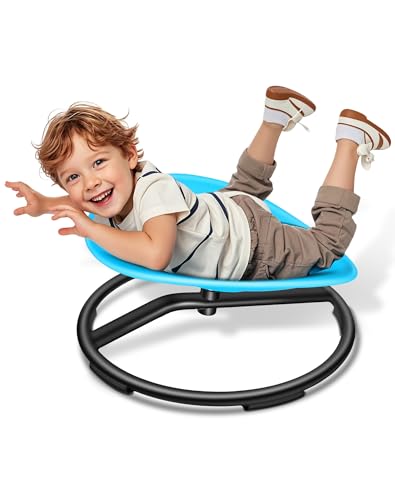
This chair balances balance training with a high weight capacity, supporting up to 100 kilograms. The design emphasizes safety and comfort with a visually appealing look that appeals to children. The sensory swivel feature helps develop left-right brain coordination when kids rotate through different positions. The base uses advanced welding and anti-slip properties to maintain stability on various floor surfaces.
KidBloom Spinning Chair for Autistic Kids

KidBloom emphasizes safety with dual handles that enhance grip and stability during spinning and movement. A reflective diamond pattern on the panel adds tactile and visual sensory stimulation for a richer experience. The chair uses a silent 360° swivel mechanism and a sturdy metal base, supporting up to 220 pounds. It is suitable for daily use in classrooms or homes where quiet, controlled vestibular input is valued.
Buying Guide: Key Purchase Considerations
When selecting chairs for kids with autism, consider these factors to ensure a good fit for both the child and the setting:
- Weight capacity and durability: Look for sturdy bases and reinforced joints to withstand active movement.
- Rotation range and motion type: 360° swivels support proprioception, while limited-motion designs may suit more sensitive children.
- Safety features: Check for anti-slip bases, rounded edges, and secure fasteners; consider chairs with handles for added stability.
- Size and age appropriateness: Ensure the chair size accommodates growth and space constraints in learning or play areas.
- Material and cleaning: Opt for easy-to-clean plastics and finishes that resist staining and fading from outdoor use.
- Portability and storage: Foldable or compact models can fit small rooms and therapy spaces.
- Therapeutic alignment: Some chairs emphasize vestibular input, others focus on calming compression or balance training; match the child’s sensory profile.
- Maintenance and warranty: Check warranty terms and replacement part availability to extend the product’s lifespan.
Across these options, parents and therapists should balance the child’s sensory needs with practical considerations like space, noise, and supervision requirements. A mix of spinning, kneeling, and seated play often yields the most benefits by engaging multiple motor and sensory systems. It may help to test a chair in a supervised setting to observe how the child responds to the motion, weight, and texture before committing to a long-term purchase.