In this guide
Introducing coding concepts to preschoolers can be both engaging and educational when the toys are age-appropriate and screen-free. The following selection highlights five well-regarded, block-based and robot-assisted options designed to foster logic, problem solving, sequencing, and storytelling in young children. Each product emphasizes hands-on play that lays a foundation for future coding experiences while keeping activities relational, tactile, and fun.
Summary of chosen products:
| Product | Brand | Key Benefit | Age Range |
|---|---|---|---|
| Scrambles the Fox Coding Critters | Learning Resources | Interactive story-driven challenges | Ages 4+ |
| Talebot Pro Coding Robot | MatataStudio | Screen-free, map-based commands with recording | 3-5 |
| Code & Go Robot Mouse (31 Pieces) | Learning Resources | Easy push-button coding and colorful cards | Ages 4+ |
| Botley the Coding Robot | Learning Resources | Screen-free core coding with remote control | Ages 5+ |
| WhalesBot A1 Coding Toy | WhalesBot | Magnetic modular coding with guide books | 3-6 |
Scrambles the Fox: Screen-Free Coding Challenges

Learning Resources offers a screen-free introduction to basic coding principles with Scrambles the Fox. The 12-page storybook adventure provides narrative-driven challenges that require children to plan paths and predict outcomes. The toy encourages children to think through steps, adjust routes, and learn to follow a sequence of actions. Crafted for early learners, Scrambles emphasizes hands-on problem solving and repetition to reinforce core concepts in a approachable format.
Talebot Pro: Story-Driven Coding Robot

Talebot Pro combines storytelling with tangible commands. An interactive map and voice feedback guide toddlers aged 3 to 5 through simple steps, sequences, and loops. Its recording function lets children capture their own voice commands and stories, turning play into a creative narrative exercise. The screen-free design keeps learning focused on physical interaction, while up to 256 commands expose young minds to foundational coding concepts in a playful format.
Code & Go Robot Mouse (31 Pieces)
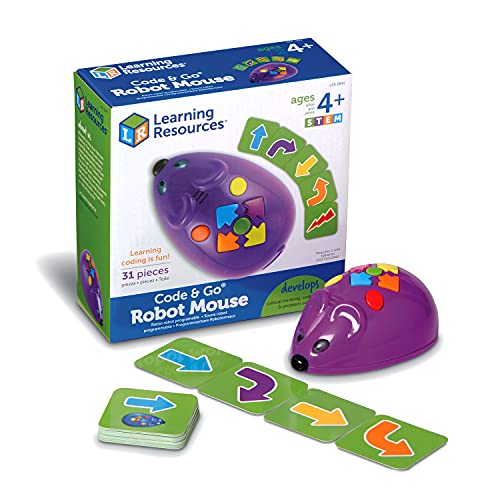
In this classic kit, a light-up robot mouse answers to simple codes, teaching sequential thinking and basic programming fundamentals. Children use pictorial direction cards to plan paths and then press buttons to send the mouse on its route. The design supports essential skills like visual tracking, 2-D to 3-D relationships, and problem solving. This entry is particularly accessible for younger preschoolers while offering room to grow into more advanced tasks as skills mature.
Code & Go Robot Mouse Activity Set
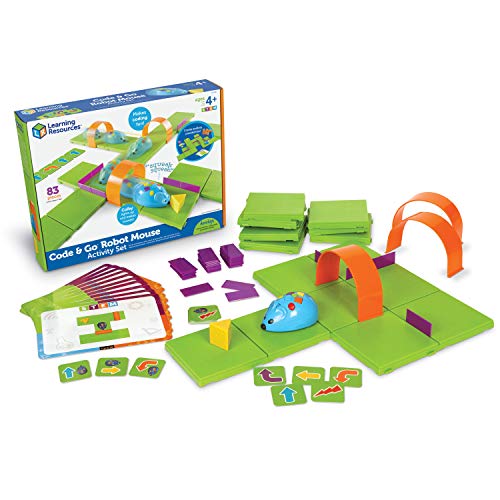
The Activity Set expands on the core Mouse concept to offer a broader, more hands-on coding experience. With additional pieces and activities, kids tackle more complex tasks and increasing levels of challenge. The set reinforces critical thinking, sequencing, and problem-solving, while maintaining a screen-free approach that supports focus and engagement during independent play or guided activities in a classroom or homeschool setting.
Botley the Coding Robot

Botley emphasizes screen-free exploration of coding basics with a straightforward remote control and card-based activities. Its immediate usability makes it appealing for younger children, providing intuitive access to sequencing, loops, and patterns. The robot’s capabilities scale with the child’s growing skill, making this a flexible option for families seeking a durable, adaptable coding companion that complements classroom learning and family playtime alike.
WhalesBot A1: Magnetic Coding Kit

WhalesBot A1 introduces magnetic modules and sensor-based play to help children explore cause-and-effect, problem solving, and design thinking. The kit includes a magnetic controller and modular blocks that children assemble to create different configurations, guided by three beginner-friendly books. This hands-on approach makes abstract coding ideas tangible and encourages experimentation as kids learn through building, testing, and iterating.
zhiwuzhu Magnetic Alphabet Maze

This Montessori-inspired maze uses magnetic letters and vehicles to promote alphabet recognition, fine motor development, and logical thinking. The magnet-based design supports safe, tactile exploration and offers a natural transition from language-focused activities to early coding concepts by reinforcing sequence, pattern recognition, and problem solving through a different lens.
Buying Guide: Key Considerations For 3 Year Olds
- Age appropriateness: Look for toys explicitly designed for ages 3–5. Simple controls, larger pieces, and straightforward rules help maintain engagement without frustration.
- Screen-free focus: Prioritize physical manipulation and storytelling to foster hands-on reasoning, spatial awareness, and fine motor skills.
- Progression and adaptability: Choose toys that scale in complexity or offer multiple activities to keep children challenged as skills grow.
- Storytelling integration: Toys that weave stories or role-play into coding tasks can deepen understanding and sustain motivation.
- Durability and safety: Opt for sturdy materials, rounded edges, and non-toxic finishes suited for toddlers and preschoolers.
- Educational outcomes: Consider how the toy supports sequencing, problem solving, planning, memory, and early computational thinking.
- Independence vs. guided play: Some products are best used with adult prompts, others encourage solo exploration; balance based on the child’s temperament.
- Maintenance: Check for battery requirements, whether components are easily replaceable, and how often you’ll need replacements for long-term use.
Across these options, parents and educators can select toys that align with a child’s interests—whether they lean toward story-driven adventures, robot-building challenges, or magnetic modular play. The common thread is hands-on exploration that introduces the fundamentals of coding in a tangible, age-appropriate way. By combining different formats, children gain a well-rounded foundation: they practice sequencing, trial-and-error thinking, and expressive storytelling while having fun.