In this guide
Educational toys can support early development by promoting language, problem-solving, motor skills, and curiosity. This guide highlights five well-rounded options that are age-appropriate for around 12 months and beyond. Each pick combines engaging textures, sounds, and simple challenges designed to grow with your child. Below, you’ll find quick product summaries and a buying guide to help you choose toys that encourage safe exploration and durable play.
| Product | Brand | Core Benefit |
|---|---|---|
| LeapFrog Learning Friends 100 Words Book | LeapFrog | Builds vocabulary with 100+ words, music, and interactive pages |
| Fisher-Price Toddler Learning Toy Laugh & Learn Smart Stages Chair | Fisher-Price | Interactive seat with songs, colors, shapes, and numbers |
| ZCMFHTD Montessori Fishing Toy Set | ZCMFHTD | Fine motor skills, color/counting concepts through fishing play |
| Fisher-Price Stacking Blocks | Fisher-Price | Sorting, stacking, and early geometry through play |
| Airbition Talking Flash Cards | Airbition | Vocabulary building with sounds and images for language development |
LeapFrog Learning Friends 100 Words Book, Green
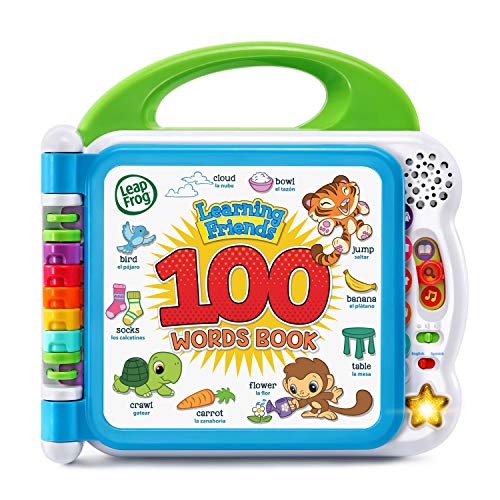
The LeapFrog Learning Friends 100 Words Book combines tactile pages with audio playback to introduce more than 100 age-appropriate words. Learning friends Turtle, Tiger, and Monkey guide early vocabulary across categories such as pets, animals, food, mealtime, colors, activities, opposites, and outdoor items. Children touch words on the pages to hear corresponding words, pleasant sound effects, and fun facts. The light-up star button activates the Learning Friends theme song and a favorite word, reinforcing memory through music and repetition. This toy supports early language development and word recognition in a portable, book-like format.
Fisher-Price Toddler Learning Toy Laugh & Learn Smart Stages Chair

This electronic chair is designed for infants and toddlers with active engagement in mind. It features more than 120 songs, sounds, and phrases, along with lights and interactive activities. The chair responds to sitting and standing, triggering music and phrases that teach colors, shapes, numbers, counting, and opposites. With three Smart Stages levels, the content scales with a growing child, offering a structured progression while keeping playtime entertaining and educational.
ZCMFHTD Montessori Toys for 1 Year Old – 22Pcs Fishing Game

The 22-piece Montessori Fishing Toy Set engages toddlers with a fishing pole, multiple soft felt fish, stackable buckets, and an ocean mat that doubles as a storage bag. This setup promotes hand-eye coordination, fine motor skills, and early counting as children catch fish by color or number and sort items. The soft materials and lack of sharp edges emphasize safety, while machine washing helps maintain cleanliness for active little explorers. The realistic fishing experience encourages imaginative play and cognitive development in a playful format.
Fisher-Price Stacking Toy Baby’s First Blocks

This set of 10 colorful blocks invites sorting, stacking, and shape matching. Toddlers explore cause and effect as they place blocks into a bucket for storage, enhancing fine motor skills and hand-eye coordination. The easy-carry handle supports on-the-go play, making it convenient for travel or quick play sessions at home. Clear, simple shapes and bright colors help develop visual discrimination and early problem-solving abilities in a safe, durable package.
Airbition Talking Flash Cards for Toddlers

The Airbition Talking Flash Cards combine 224 illustrated cards with a sound-enabled reader to expand vocabulary across animals, vehicles, foods, and more. The device offers a standard American accent, a repeat function, and adjustable volume with five levels. This tool serves as a practical aid for language development and could complement speech therapy or autism-focused educational strategies. The Montessori-inspired approach uses visual and auditory cues to reinforce word-object associations in a lively, reusable format.
Buying Guide
- Age appropriateness: Verify that the toy is labeled for 12 months and up, with elements that match a child’s developmental stage. Look for durable, large pieces that reduce choking risk and minimize small-part hazards.
- Learning domains: Consider toys that cover language development (vocabulary, naming objects), fine motor skills (grasping, pinching, stacking), cognitive reasoning (sorting, counting), and sensory exploration (sound and touch).
- Safety and durability: Choose products made from non-toxic materials, rounded edges, and washable fabrics or easy-clean surfaces. Durable construction helps withstand rough handling and frequent use.
- Ease of use and accessibility: Toys with simple on/off switches, intuitive interactions, and clear audio cues support self-directed play. Bright colors and varied textures can aid attention and exploration.
- Cleaning and maintenance: Toys that are dishwasher-safe or machine-washable are convenient for busy caregivers. Look for materials that resist staining and are quick to dry.
- Battery life and replacements: Consider devices with long-lasting batteries or rechargeable options. Check for safety features to prevent exposure to small battery components.
- Future growth: Select options that offer scalable challenges or multiple modes of play to continue engaging a child as they develop.
- Portability and storage: Compact, lightweight toys with organized storage help with family travel and clean-up routines.
- Budget considerations: Prioritize versatile toys that deliver educational value across several skills rather than single-function gadgets when possible.
- Consumer reviews and safety certifications: Read independent reviews for reliability. Look for certifications or safety standards that indicate compliance with child-safety guidelines.
The synthesis of these five products provides a well-rounded educational mix: vocabulary-building reading experiences, interactive songs and actions, fine motor and cognitive development through hands-on play, and language development tools that support early speech and comprehension. Parents can rotate options to maintain engagement and track progress across different skill areas, ensuring a comprehensive early-learning environment.