In this guide
Parents seeking safe, engaging toys for toddlers can prioritize activities that build fine motor skills, early language, color and shape recognition, and cognitive thinking. The following curated selections emphasize Montessori-inspired wooden designs, interactive storytelling, magnetic drawing, and role-play tools—each chosen for developmental value and age-appropriate challenges. Read on to compare features and find options that suit your child’s curiosity and learning pace.
- Product: Toddlers Montessori Wooden Educational Toys for Baby Boys Girls Age 1 2 3 Year Old, Shape Sorting Toys 1st One First Birthday Girl Gifts for Kids 1-3, Wood Preschool Learning Fine Motor Skills Game
– Brand: KMTJT
– Key insights: Montessori-inspired with multiple blocks and a five-sided sorting cart; non-toxic water-based paint; designed to boost shape and color recognition while developing fine motor skills. - Product: LeapFrog Learning Friends 100 Words Book, Green
– Brand: LeapFrog
– Key insights: Interactive picture book featuring over 100 words across essential categories; touch-activated pages and a memorable theme song to reinforce vocabulary through play. - Product: Airbition Talking Flash Cards for Toddlers 1 2 3 4 Year Olds, Montessori Language Learning with 224 Words
– Brand: Airbition
– Key insights: Audio-visual learning that supports speech development and early literacy; designed as a versatile tool for autism-friendly and speech therapy contexts; adjustable volume and repeat features. - Product: LeapFrog 2-in-1 LeapTop Touch, Green
– Brand: LeapFrog
– Key insights: Convertible laptop/tablet toy with alphabet and number content; supports pretend play and early handwriting skills; helps kids practice spelling their own name. - Product: PEBIRA Montessori Toys for 1 to 3-Year-Old Boys Girls Toddlers, Wooden Sorting & Stacking Toys
– Brand: PEBIRA
– Key insights: Wooden color and shape sorting puzzle with multiple holes; supports color, shape, and number recognition; smooth edges and toddler-friendly design.
KMTJT Montessori Shape Sorting Wooden Toys

The KMTJT set blends classic Montessori principles with colorful, child-safe components. It includes 12 fruit blocks, 8 carrots, 10 worm figures, and a five-sided cart with various shapes and structures. The pieces are crafted from wood with large particle size, smooth edges, and non-toxic water-based paint. This design emphasizes tactile exploration and practical sorting, supporting sensory learning and early cognitive development. The multiple game modes—shape matching, sorting, and storage—offer varied activities to keep toddlers engaged as they grow from one to three years old. Fine motor skills are targeted through precise grasping, pinching, and movement of pieces into appropriate slots.
LeapFrog Learning Friends 100 Words Book
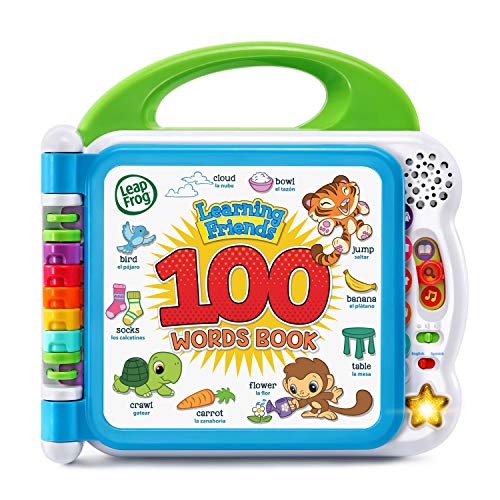
The LeapFrog 100 Words Book invites toddlers to explore more than 100 words across themes like pets, animals, colors, foods, and activities. By touching the words on the illustrated pages, children hear pronunciations, sound effects, and a short fact, enhancing word recognition in a fun, interactive way. The Learning Friends character trio (Turtle, Tiger, and Monkey) adds engaging personalities that guide exploration, while a light-up star button triggers the theme song and a favorite word. This format supports emergent literacy, listening skills, and memory recall in a compact, durable package ideal for busy toddlers.
Airbition Talking Flash Cards

This talking flash card system features 224 colorful images and sounds, expanding vocabulary with animals, vehicles, foods, fruits, and vegetables. It’s designed to support Montessori-style learning and can serve as an effective tool for children with autism or speech delays, thanks to its audio-visual approach and repeat function. The device is straightforward to operate—simply switch on, insert a card, and listen to content in a standard American accent. Volume control and a repeat option make it adaptable for various listening environments and attention spans, helping toddlers practice word recognition and early language in short, focused sessions.
LeapFrog 2-in-1 LeapTop Touch

The LeapTop Touch offers a dual-mode experience: a keyboard-based laptop and a flip-to-tablet mode. It introduces letters A–Z and numbers 1–10, while supporting role-play activities such as emailing Scout. The device encourages pretend play, early writing practices, and alphabet recognition. Parents can customize the experience to help their child spell their own name, aligning with early literacy goals and personalized learning. The transformable design accommodates evolving abilities, making it a versatile option for two-year-olds who are rapidly expanding their cognitive and motor skills.
PEBIRA Montessori Toys Sorting & Stacking

The PEBIRA wooden sorting and stacking puzzle uses 20 colorful pieces, including blocks in five colors and five geometric shapes. It helps children differentiate shapes, colors, and sizes while building hand-eye coordination and spatial reasoning. With smooth edges and toddler-friendly sizing, this toy supports early geometry learning and color recognition, making it a strong option for 2- to 3-year-olds. The multiple matching possibilities promote problem-solving and creative play as children experiment with various combinations and patterns, reinforcing cognitive flexibility and fine motor control.
Buying Guide: Key Considerations For Choosing Educational Toddlers’ Toys
- Developmental fit: Select toys that align with gross and fine motor milestones, language development, and early cognitive skills. Toys that encourage sorting, counting, or letter recognition provide broad learning opportunities for ages 1–3.
- Material and safety: Prioritize non-toxic materials, rounded edges, and sturdy construction. Wooden toys with water-based paints tend to offer durability and a natural feel that many families prefer.
- Multisensory engagement: Look for toys that combine tactile, visual, and auditory elements—such as interactive sound, textures, and color contrasts—to sustain attention and support diverse learning styles.
- Durability and adaptiveness: Choose modular or transformable toys that can grow with a child’s abilities, such as laptop-to-tablet formats or sorting tasks that increase complexity over time.
- Portability and storage: Consider compact designs with easy storage to support playtime in small spaces or travel scenarios. Clear color-coding and simple sorting rules help with organization.
- Educational emphasis vs. entertainment: Aim for a balance—toys should promote learning outcomes while remaining enjoyable to motivate ongoing exploration and practice.
- Accessibility and inclusivity: Features like adjustable volume, varied language support, and sensory-friendly options broaden accessibility for children with different needs.
- Maintenance: Check cleaning requirements, especially for wooden pieces or items with small parts. Easy wipe-clean surfaces are advantageous for busy households.
In selecting educational toys for 2-year-olds, prioritize items that support early literacy, language development, problem solving, and motor skills while ensuring they are safe, durable, and age-appropriate. The showcased options provide a mix of Montessori-inspired wooden sets, interactive books, language-focused tools, and versatile role-play toys to address multiple learning domains. Parents can rotate or combine these picks to sustain interest and optimize developmental gains across toddlerhood.