In this guide
Parents and educators can boost early literacy and math skills with engaging, hands-on tools. This guide highlights five highly relevant products that support sight words, phonics, counting, and basic math concepts for kindergarten learners. Each item combines interactive activities with practical classroom or home use, helping children build confidence as they explore letters, sounds, and numbers.
| Product | Brand | Core Focus | Highlights |
|---|---|---|---|
| Scholastic Flash Cards: Sight Words | Scholastic | Sight Words | Promotes rapid word recognition, classroom-ready |
| TOP BRIGHT Preschool Learning Toys | TOP BRIGHT | Early Math & Counting | Montessori-inspired, hands-on number blocks |
| School Zone Go Fish Alphabet Game Cards | School Zone | Alphabet & Letter Recognition | Colorful visuals, word-picture matching |
| Alened Phonics Flash Cards | Alened | Phonics & Reading Readiness | CVC word practice, vowel/consonant cues |
| Learning Resources MathLink Cubes | Learning Resources | Foundational Math Concepts | 100 cubes, various math skills |
Scholastic Flash Cards: Sight Words

These flash cards focus on essential sight words, helping early readers recognize common terms quickly. The program emphasizes visual and verbal cues to reinforce rapid recall, a key predictor of reading fluency in kindergarten. Teachers can use them for small-group practice or independent rotations, pairing cards with quick, targeted activities to strengthen word recognition. The durable format supports daily use in busy classrooms and home learning environments, promoting consistent practice without disrupting routines.
TOP BRIGHT Preschool Learning Toys for Toddlers 2-4

This Montessori-inspired set emphasizes hands-on math exploration through counting blocks and a wooden finger board. It’s designed to build number recognition, simple addition and subtraction within 10, and fine motor skills as children manipulate the pieces. The colorful blocks and tactile components encourage a playful approach to foundational math concepts, making it suitable for homeschooling or preschool settings. It helps children develop a positive association with numbers and problem-solving from an early age.
School Zone Go Fish Alphabet Game Cards

These alphabet game cards blend matching, uppercase-lowercase recognition, and word-picture associations. The colorful animal illustrations engage young learners, while bold letters improve visibility and recall. The Go Fish format supports cooperative play, encouraging turn-taking and verbal practice as children identify letters, sounds, and simple words. It’s a versatile resource for small-group literacy centers or family game time, helping children gain confidence with letters in a social context.
Alened Phonics Flash Cards

Alened’s flash cards emphasize phonics through CVC, CVCC, and CCVC word-building activities. The kit includes 80 double-sided cards with accompanying pictures to support word construction and decoding. Vowel-consonant distinctions are highlighted to reinforce phonemic awareness, while color cues differentiate consonants and vowels. This resource works well for classroom pair activities, reading centers, or homework practice, helping children build a solid phonics foundation essential for early reading success.
Learning Resources MathLink Cubes
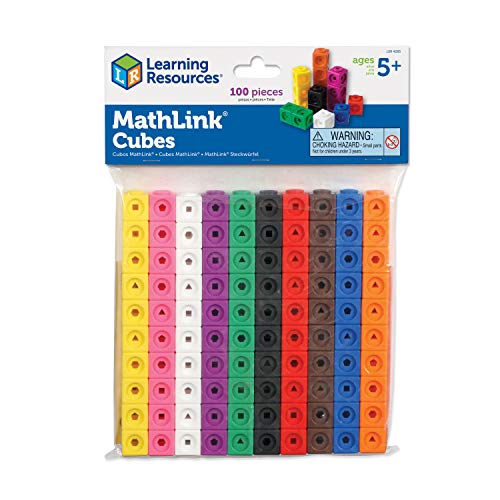
MathLink Cubes offer versatile math practice with 100 cubes in a single set, supporting counting, one-to-one correspondence, and early arithmetic. The cubes are compatible with school-ready activities such as skip counting, place value exploration, and basic addition/subtraction. The included guidance and activity ideas help teachers and parents create structured lessons or centers, while the modular design allows kids to build models, patterns, and graphs. This set supports both independent work and guided instruction in early elementary math.
Buying Guide: Key Considerations For Kindergarten Learning Tools
- Age and skill alignment: Choose resources that match foundational literacy and math goals for kindergarten (letters, sounds, basic word-building, counting, and simple operations).
- Hands-on vs. digital: Practical manipulatives like flash cards, cubes, and blocks reinforce concepts through touch and movement, complementing screen-based activities.
- Durability and safety: Look for sturdy materials suitable for daily use by young children. Non-toxic finishes and rounded edges are important for safety.
- Progress tracking: Tools that allow easy assessment of progress (quick checks, practice cards, or observation prompts) help tailor instruction.
- Inclusion and accessibility: Consider resources that support diverse learners, including visual cues, color coding, and simple instructions for teachers and caregivers.
- Classroom vs. home use: Some sets scale well for group centers; others work best for individual or small-group practice at home.
- Value and versatility: Look for items that cover multiple skills (e.g., phonics, word recognition, and basic counting) to maximize learning opportunities.
- Storage and organization: Materials that come with trays, boxes, or organizers make it easier to maintain order and reuse across activities.