In this guide
Finding a robot that suits a 10-year-old means balancing fun with learning. The right robot toy can spark curiosity in robotics, programming, and problem-solving while offering engaging play. Below are five well-rounded options that align with a 10-year-old’s growing interests in hands-on building, interactive motion, and creative exploration. Each product is described with key features to help parents compare options for development, learning, and entertainment.
| Product | Brand | Highlights |
|---|---|---|
| Henoda Robot Toys | Henoda | 468+ pieces, app & remote control, 4 modes, 20m remote range |
| Ruko 1088 Smart Robot | Ruko | 15.8 inches tall, voice control, app control, expressive features |
| Thames & Kosmos Mega Cyborg Hand | Thames & Kosmos | Hydraulic action, no electronics, adjustable finger joints |
| VAV Robo | VAV | 2.4GHz gesture sensing, programmable remote control, LED eyes |
| KingsDragon RC Robot | KingsDragon | Gesture & sensing, programmable actions, multiple modes |
The following sections present five selected products with structured details to help you compare capabilities, learning potential, and play styles. Each section includes a clickable Amazon link, an image, and a concise summary of features that matter for a 10-year-old learner.
Henoda Robot Toys For Schools And Homes
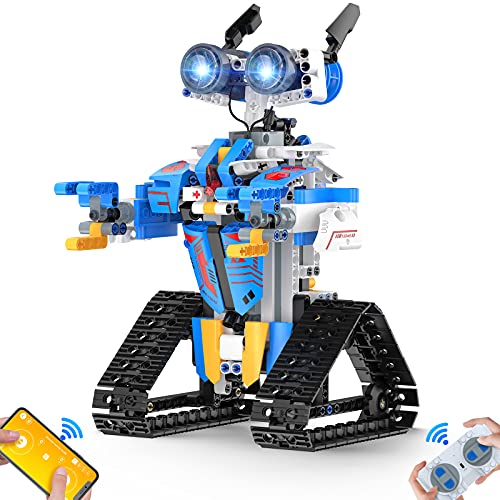
Henoda offers a large STEM building kit with 468+ pieces and vibrant stickers that engage kids in construction play while developing hand-eye coordination and practical skills. The toy supports multiple modes, including motion in four directions and 360-degree rotation for dynamic performance. A highlight is the combination of APP Bluetooth control and a physical 2.4GHz remote, enabling flexible play from screen-based programming to real-world remote operation. The kit fosters imagination as children design their own transformations and control strategies, making it well-suited for classrooms or family projects.
Key features include a remote-control range exceeding 20 meters, glowing eyes, and articulated joints that enable varied poses and stunts. The set encourages kids to step away from screens and explore physical model-building. For parents seeking a robust, long-term builder-plus-robot experience, Henoda provides a broad platform for experimentation and skill development, with symmetry between creative play and STEM learning.
Ruko 1088 Smart Robot For Kids

Ruko’s 1088 robot stands tall at up to 15.8 inches, offering a strong presence for interactive play. It combines visual appeal with multiple storytelling and educational features, including ten expressions and nine joints that create lifelike movements. The robot supports voice commands and apps, enabling basic programming concepts as kids explore sequencing, cause and effect, and simple logic. Its diverse functions—gymnastics, storytelling, dance, music, and recording—provide a wide range of activities that keep kids engaged while building early computational thinking and motor coordination.
As a gift, the robot’s size and expressiveness make it an eye-catching centerpiece for a child’s play area or bedroom. The combination of app and voice control helps bridge screen-based learning with tangible action, allowing for a gradual introduction to programming concepts as kids grow more confident with the device. The Ruko 1088 is well-suited for curious kids who enjoy imaginative play enhanced by technology.
Thames & Kosmos Mega Cyborg Hand

This kit introduces hydraulic engineering without motors or batteries, relying on air pressure and hydraulic pistons to operate. The project centers on building a wearable mechanical hand that users control with their own fingers, enabling up-close exploration of pneumatics and basic engineering principles. Each finger joint can be adjusted for precise movement, teaching mechanical concepts like leverage, force, and actuation. While it emphasizes hands-on experimentation, it also reinforces problem-solving and iterative design as kids refine finger control and grasp strength.
Thames & Kosmos emphasizes a straightforward, safe approach to complex ideas. The absence of electronics highlights fundamental physics and the tactile joy of building, lifting the learning experience beyond pretend play into tangible experimentation. This kit is ideal for hands-on learners who enjoy mechanical systems and want a tactile understanding of how forces translate into motion and control.
VAV Toys: Gesture-Sensing RC Robot
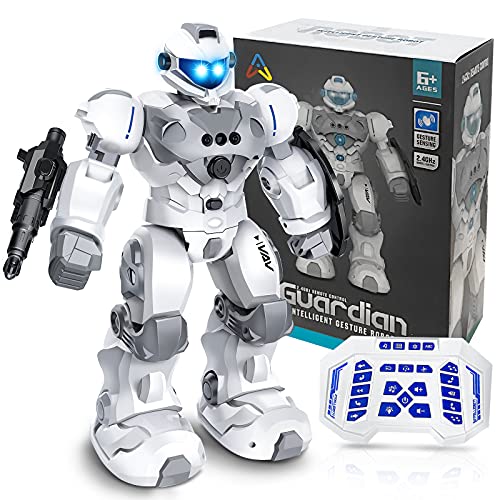
VAV’s robot emphasizes remote control and gesture sensing, letting kids guide the robot with a controller or by gesturing with their hands. The programmable aspect adds a creative layer: children can design sequences by combining commands into steps, then watching the robot execute them. The built-in LED eyes and a robust design make it visually appealing while supporting cognitive development through sequencing, planning, and debugging as kids refine their instructions. The 2.4GHz remote provides a reliable connection for smooth gameplay from a moderate distance.
With its larger form factor and upgraded appearance, VAV is positioned as both a classroom-friendly learning tool and a fun home playmate. The combination of gesture control and programming fosters multi-modal learning—children can experiment with immediate physical feedback from movement while building more complex, multi-step routines. This makes it a versatile option for encouraging persistence and structured problem solving.
KingsDragon RC Robot: Gesture & Sensing

KingsDragon’s robot blends infrared remote control with hand-gesture sensing, enabling a hands-on control experience. It offers about 50 programmable actions, allowing kids to input sequences and watch the robot replay them in order. The design emphasizes multi-functionality, including automated demonstrations and obstacle avoidance. The build uses non-toxic ABS plastic and features multi-joint articulation, offering a sturdy platform for kids to explore motion, choreography, and basic programming concepts as they create their own mini performances. The robot is positioned as both a learning tool and engaging toy for 3- to 8-year-olds stepping into more complex robotics play.
The KingsDragon robot supports a wide action repertoire, making it easy for kids to experiment with movement patterns, reflexes, and timing. Its emphasis on hands-on control and programming provides a natural progression from simple remote play to more sophisticated, personalized routines. This versatility makes the KingsDragon a compelling option for families seeking long-term play value and learning potential.
Buying Guide: Key Purchase Considerations
- Age appropriateness: Confirm the recommended age range and ensure the complexity matches a 10-year-old’s developing skills in hands-on building and basic programming.
- Learning focus: Decide whether your child wants core STEM exploration (mechanics, hydraulics, electronics) or more story-driven play (expressive features, storytelling, music).
- Control method: Consider preference for app-based programming, remote control, gesture sensing, or a combination. Apps can deepen programming basics, while remotes and gestures offer tangible control.
- Hands-on building vs. ready-to-run: Some kits emphasize assembly and design (great for engineering skills), while others emphasize immediate play with fewer setup steps.
- Durability and parts: Look at joint articulation, material safety, and whether parts are modular for future upgrades or project expansion.
- Learning curve: For younger or less tech-inclined kids, simpler interfaces with guided experiments can reduce frustration and sustain motivation.
- Expansion potential: Some systems offer additional kits or modules that extend learning over time, turning a single purchase into a longer-term STEM journey.
- Safety and supervision: Inspect any small parts or magnets, and ensure age-appropriate supervision during assembly or operation as required.
Across these options, the best choice balances immediate fun with transferable skills such as programming basics, problem-solving, and spatial reasoning. For families seeking structured classroom-like activities, kits with project-based learning and clear goals can offer the most consistent growth. For those prioritizing creative expression, robots with gesture sensing, storytelling, and music provide engaging ways to experiment with motion and control. Finally, consider your child’s interests—whether they gravitate toward mechanical build projects, coding concepts, or expressive performances—as a guide to the most rewarding purchase.