In this guide
Discover engaging, hands-on robot kits that blend science, technology, engineering, and mathematics for young builders. This guide highlights five practical kits that emphasize solar power, remote control, and modular construction to foster problem solving, creativity, and critical thinking without screens. Each option offers rich educational value and durable, kid-friendly components designed for safe, screen-free play or classroom activities.
Summary of chosen products: the list below includes five popular, well-reviewed kits suitable for kids aged 8 and up. They cover solar-powered builds, multi-model flexibility, and programmable features to support varying interests and skill levels. Use the table to compare core ideas, then explore deeper in each product section to see features, age ranges, and learning outcomes.
| Product | Brand | Key Focus | URL |
|---|---|---|---|
| Sillbird 12-in-1 Solar Robot Building Kit | Sillbird | Solar-powered, 12 models | Amazon |
| Bottleboom 13-in-1 Solar Power Robots | Bottleboom | Solar-powered, 13 models | Amazon |
| Lucky Doug 12-in-1 Solar Robot Kits | Lucky Doug | Solar-powered, 12 models | Amazon |
| Henoda 468+ Piece Remote Control Robot Kit | Henoda | Remote control, multiple modes | Amazon |
| Sillbird 5-in-1 Remote-Control Robot Kit | Sillbird | 5 models, dual control (app and remote) | Amazon |
Sillbird 12-in-1 Solar Robot Building Kit

Designed for outdoor and indoor play, this solar-powered kit includes 190 pieces to build 12 different robots. It promotes hands-on exploration of renewable energy and basic engineering concepts. The kit is marketed as an ideal gift for kids and teens, suitable for birthdays or holidays, with screen-free STEM learning at its core. Outdoor usage enhances understanding of solar power, while indoor use with a light source maintains play value when sunlight is limited.
BeAndge STEM Kits for Kids

This multi-set features five distinct STEM builds, including a solar-powered car, wind-powered car, obstacle-avoidance robot, transmission tank, and a glider. It’s presented as a classroom-friendly option and a gift idea for kids ages 8-12. The package emphasizes collaborative family projects and learning through experimentation, with a focus on practical application of energy concepts and mechanical design.
Bottleboom 13-in-1 Solar Power Robots

This 13-in-1 set guides builders through step-by-step assembly to create land and water robots powered by solar energy. The kit includes gears, plates, tires, and shafts that can be disassembled and rebuilt, reinforcing mechanical thinking and problem-solving. Materials are described as non-toxic ABS with smooth finishes to reduce sharp edges, aligning with safety expectations for kids ages 8-12.
Lucky Doug Solar Power Kits
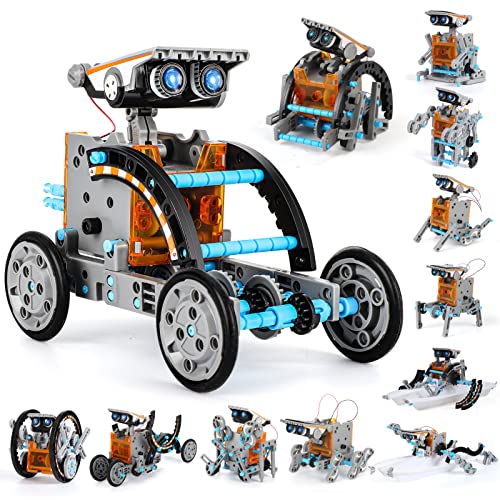
Offering 12+ models, this solar robot kit emphasizes hands-on assembly with a focus on renewable energy. It encourages children to explore solar power while building a range of robotic configurations. Clear, step-by-step instructions help families assemble models together, making it suitable for both independent play and guided learning sessions.
Henoda 468+ Piece Remote Control Robot Kit
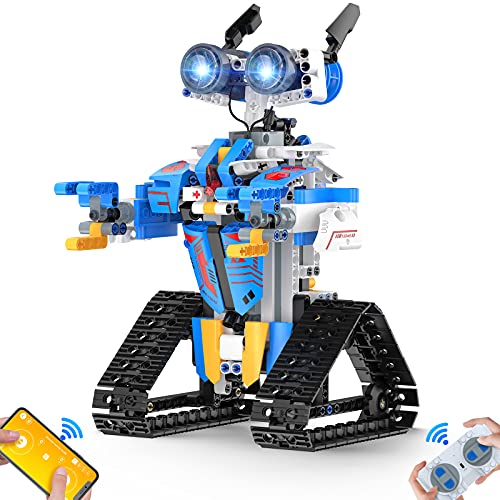
With more than 468 pieces, this kit blends brick-building with robotics, including multiple movement modes and a Bluetooth app for control, plus a 2.4 GHz remote. It’s designed to expand imagination, strengthen fine motor skills, and support continued interest in engineering through modular construction and programmable options. The set targets kids 8 and older, suitable for home or classroom learning.
Sillbird 5-in-1 Remote-Control Robot Kit

This kit bundles five different models into one package, allowing both Bluetooth/app and remote control operation. It supports basic programming, path planning, and precise movement, enabling kids to explore computational thinking while building diverse robotic configurations. The dual-control design broadens play options and can scale with growing skill levels.
Buying Guide: Key Purchase Considerations
- Age and skill alignment: Look for kits clearly labeled for the child’s age range and skill level. Some sets emphasize simple assembly with guided instructions, while others introduce programming and more complex robotics concepts.
- Power source and environment: Solar-powered kits teach renewable energy concepts and motivate outdoor play, while battery- or plug-powered options enable year-round use. Consider your typical play environment and local sunlight availability.
- Model variety and growth: Kits offering multiple build options (e.g., 6-in-12 models) promote continued engagement as skills develop. Multi-model sets help prevent boredom and encourage exploration of different mechanisms.
- Safety and materials: Choose sets with non-toxic, smooth-edged components and sturdy plastic parts. Check for compliance with age-appropriate safety standards and parental supervision recommendations.
- Programming and control: Some kits include app-based or remote control, increasing complexity and reusability. Assess whether the child benefits from introductory programming or prefers hands-on assembly and basic remote control.
- Learning outcomes: Favor kits that explicitly support science, technology, engineering, and mathematics foundations, such as energy concepts, gear systems, and basic coding or sequencing.
- Storage and durability: Consider kits with organized storage cases and durable components that withstand frequent handling by younger builders.
- Safety and supervision: Check for small parts and choking hazards for younger kids; ensure adult supervision for assemblies that involve tools or complex instructions.
Overall, the best robot kits for kids blend hands-on construction with opportunities to learn about energy, mechanics, and problem solving. Whether solar-powered models spark outdoor exploration or programmable kits introduce basic coding concepts, these kits offer varied approaches to STEM learning that can adapt to a child’s evolving interests.