In this guide
Discover top science kits that encourage hands-on exploration for kids. This guide compares selection breadth, learning value, and practical features to help parents choose engaging, educational kits that align with evolving STEM interests. The following picks cover chemistry, geology, earth science, and early hands-on experiments.
| Product | Key Focus | Why It Stands Out |
|---|---|---|
| UNGLINGA 150 Experiments | Chemistry, Earth Science, Physics | Many experiments with an approachable manual and kid-friendly tools. |
| National Geographic Break Open 10 Premium Geodes | Geology, Crystals | Real geodes to crack and reveal crystals; natural specimens. |
| Discovery Planet Earth Kit | Geology, Meteorology, Archeology | 65 Earth science activities including volcanoes and fossils. |
| Doctor Jupiter My First Science Kit | STEM Foundations, Early Experiments | 100+ experiments designed for younger kids to foster curiosity. |
| KUOVEI 80 Science Lab Experiments | General STEM, Safe Experiments | Wide variety with safety-focused materials and guided steps. |
Below are five well-rounded science kits chosen for broad appeal, safety, and educational value. Each entry includes a concise look at what the kit offers and how it supports hands-on learning for kids across ages and interests.
UNGLINGA 150 Experiments Science Kit

This kit offers 150 experiments spanning earth science, surface tension, chemistry, and physics. A well-illustrated, step-by-step manual helps kids follow along, making complex ideas accessible. Included tools and kid-friendly materials allow near real-science experiences with goggles for safety. The breadth supports inquiry-based learning and keeps curious minds engaged with a wide range of projects.
National Geographic Break Open 10 Premium Geodes

Geodes provide a tangible geology experience as kids crack open rocks to discover crystals inside. The kit emphasizes natural specimens and a hands-on discovery process, with a colorful variety of geodes. It’s a strong STEM activity that blends geology with the thrill of a treasure hunt, appealing to ages with growing curiosity about minerals and crystal growth.
Discovery Planet Earth Science Kit
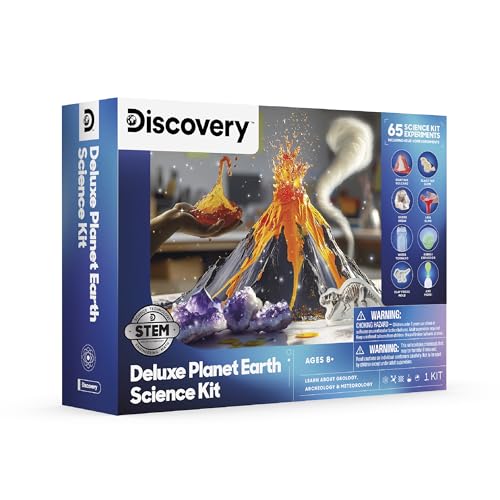
This 65-experiment kit covers geology, meteorology, archeology, and more. Activities include volcano building, fossil exploration, crystal growth, and weather-related projects. The varied topics support cross-disciplinary learning, helping kids connect scientific concepts to real-world phenomena while encouraging sustained engagement through hands-on tasks.
Doctor Jupiter My First Science Kit

Designed for younger children, this kit showcases 100+ experiments that promote critical thinking and observation. It emphasizes safe, guided exploration and a screen-free learning experience. Activities like Water Fireworks and Walking Water illustrate core STEM concepts while preserving a sense of wonder and accessibility for early learners.
KUOVEI 80 Science Lab Experiments

This versatile kit features 80 experiments with a focus on safety and repeatability. It includes a guided scientific guidance card detailing steps and underlying principles, helping kids progress from simple to more challenging experiments. It supports hands-on learning while promoting confidence and independent exploration in the early to mid-elementary years.
Buying Guide: Key Considerations When Choosing a Science Kit
- Age appropriateness: Select kits aligned with a child’s age, reading level, and fine motor skills to ensure tasks are challenging but not frustrating.
- Learning scope: Consider kits that cover multiple disciplines (chemistry, geology, physics) to encourage cross-cutting STEM connections.
- Materials and safety: Look for kid-friendly, non-toxic materials, clear safety instructions, and protective equipment like goggles when needed.
- Quality of instruction: A clear, visual manual or step-by-step guide helps children follow procedures and learn scientific vocabulary.
- Hands-on vs. guided discovery: Balance kits that offer structured experiments with those that encourage open-ended inquiry and hypothesis testing.
- Reusability and maintenance: Check if components are reusable or require disposal, and whether storage is easy for families.
- Scalability: Some kits include additional projects or expansion packs to grow with a child’s advancing skills.
- Educational value vs. entertainment: Prioritize kits that meaningfully teach scientific concepts over those that focus mainly on “fun” activities.
- Brand reliability and reviews: Consider reputable brands with clear safety information and positive user feedback from other families.
- Budget and accessibility: Compare total contents, instruction quality, and availability for quick replacements of missing pieces.