In this guide
Discover engaging science toys that spark curiosity, encourage hands-on learning, and build real-world STEM skills for tweens. This guide highlights five top picks that blend entertainment with educational value, focusing on robotics, circuits, and experimental exploration suitable for 12-year-olds.
| Product | Brand | Focus | Key Benefit |
|---|---|---|---|
| Klutz Lego Gear Bots | Klutz | Kinetic Creatures & LEGO Technic | Hands-on engineering with papercraft integration |
| STEM 13-in-1 Solar Power Robots | Bottleboom | Solar-powered robotics | 13 builds, durable solar energy learning |
| National Geographic Gross Science Kit | Blue Marble | Gross-out experiments & safety | Engaging experiments with clear, kid-friendly guides |
| Smartivity Robotic Mechanical Hand | Smartivity | Mechanical engineering & hands-on building | Screen-free construction project with lasting parts |
| COBFDHA STEM Projects | COBFDHA | Solar and battery-powered robots | Hands-on robotics with solar and electrical concepts |
Klutz Lego Gear Bots Science/STEM Kit

The Klutz Lego Gear Bots kit combines LEGO Technic elements with papercraft to build eight physics-driven kinetic creatures. The included 64-page book weaves STEM lessons on axles, cams, and cranks into step-by-step instructions. This kit emphasizes mechanical reasoning, spatial thinking, and engineering concepts as kids assemble moving models using familiar LEGO bricks. A compact, durable activity that supports both independent and guided play, with clear progression from simple builds to more complex mechanisms.
STEM 13-in-1 Education Solar Power Robots

This solar robot kit includes 13 distinct robot designs, all built from modular parts like gears, plates, tires, and shafts. Powered by solar energy, the builds demonstrate renewable energy concepts while fostering problem-solving and experimentation. The kit is designed for ages 8–12, with a user-friendly manual and a safe, non-toxic build experience that promotes teamwork and hands-on understanding of motion and energy transfer.
National Geographic Gross Science Kit

National Geographic’s Gross Science Kit offers 45 hands-on experiments with a humorous, kid-friendly approach. Activities include dissection-themed explorations, slime creation, and other quirky demonstrations. The included guide provides illustrated, step-by-step instructions and science explanations that clarify the biology and chemistry behind each gross-out project, helping young scientists connect observation with explanation in a memorable way.
Smartivity DIY Robotic Mechanical Hand

The Smartivity mechanical hand invites kids to assemble a functional robot hand using a guided manual. The project teaches engineering concepts such as levers, linkages, and motion transfer, while promoting STEM problem-solving and spatial reasoning. The kit is designed for ages 8–14 and includes replacement parts, helping ensure continued play without interruptions while reinforcing the fundamentals of mechanical design.
COBFDHA Solar & Battery Robot Projects
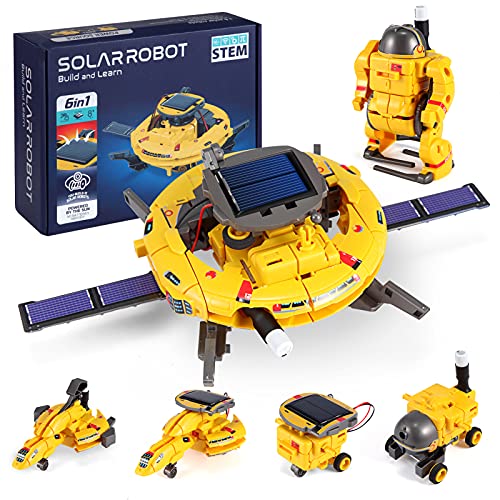
COBFDHA combines solar-powered and battery-driven robotics in a single kit. It includes six distinct building robots designed to spark curiosity about energy conversion, motion, and control systems. The project set emphasizes practical experimentation, with concepts suitable for budding engineers who enjoy exploring how sunlight or stored energy drives motion and how different power sources affect performance and design choices.
Buying Guide
- Age appropriateness: Look for kits labeled for ages 8–12 or 9–14 to ensure appropriate difficulty and safety considerations for a 12-year-old.
- Learning focus: Decide whether you want robotics, circuits, solar energy, or a mix. Some kits emphasize mechanical design, while others concentrate on energy concepts or programming basics.
- Materials and safety: Check for kid-friendly, non-toxic materials and sturdy construction that withstand repeated assembly and disassembly.
- Upgradability: Consider kits that offer multiple builds or replacement parts to extend learning over time and adapt to growing skills.
- Hands-on engagement: Look for clear, step-by-step instructions with visual guides. Projects that require critical thinking, problem-solving, and troubleshooting tend to have lasting value.
- Multiplayer and collaboration: Some kits support group projects, which can foster teamwork and communication—useful skills beyond STEM.
- Power source variety: Solar-powered options introduce renewable energy concepts, while battery or manual builds reinforce fundamentals of motion and control.
- Longevity and updates: Reusable parts and compatibility with other kits can maximize long-term use and learning potential.