In this guide
Parents seeking engaging space-themed toys for 3-year-olds can balance curiosity, safety, and early STEM skills with the right selections. This guide highlights five top picks that encourage imaginative play, introduce basic science concepts, and support fine motor development. Each option below is designed for little explorers, featuring durable materials, age‑appropriate features, and vivid space themes that captivate young minds.
| Product | Brand | Key Benefit |
|---|---|---|
| iPlay, iLearn Rocket Outer Space Toys | iPlay, iLearn | Hands-on assembly and interactive lights/sounds |
| Zeoddler Solar System Puzzle for Kids 3-6 | Zeoddler | Wooden puzzle for color recognition and spatial skills |
| JOYIN Rocket Ship Play Tent | JOYIN | Imaginative space habitat for indoor/outdoor play |
| BONNYCO Solar System Felt Board | BONNYCO | Montessori-inspired planetary learning and storytelling |
| BLOONSY Space Shuttle Toy | BLOONSY | Multi-sensory space adventure with lights and sounds |
iPlay, iLearn Rocket Outer Space Toys

The Interstellar Assembly Rocket Toy offers an engaging space exploration experience tailored for young children. Designed to inspire curiosity, it invites kids to role‑play visits to distant planets with a realistic rocket aesthetic that kids can assemble themselves. The toy emphasizes hands‑on problem solving and fine motor development as children follow simple steps to construct the rocket, boosting hand‑eye coordination while reinforcing basic sequencing concepts. In addition to the physical assembly, interactive lights and sounds add a dynamic sensory layer that helps sustain attention during play.
Key features include authentic rocket details such as boosters, detachable stages, and a command module, all scaled for preschoolers. The included astronauts and the educational take‑apart aspect support narrative play—kids can invent space missions, dock with imagined space stations, or simulate a launch sequence. While the toy is robust for small hands, it remains gentle enough for safe, supervised play. This option is well suited for families seeking STEM‑oriented, immersive play that blends creativity with foundational science.”
Zeoddler Solar System Puzzle for Kids 3-6

This wooden solar system puzzle introduces early astronomy concepts through tactile, color‑rich pieces. Suited for children aged 3 and up, the set emphasizes natural wood craftsmanship and durable construction, making it a long‑lasting educational toy. The vivid planet shapes and bold labels help toddlers recognize each celestial body while gradually building spatial awareness as they assemble the system. The addition of the Sun, Moon, and 5 dwarf planets rounds out a well‑paced learning experience that blends visual, tactile, and cognitive engagement.
Children develop hand‑eye coordination and problem‑solving as they fit pieces into the correct places. The puzzle format also supports language development as caregivers narrate planetary names and relationships. A thoughtful feature is the intended cross‑talk between play and learning—kids can describe what they are placing and why, reinforcing memory and recall. This choice benefits families seeking an approachable, Montessori‑style entry into space learning without screens.
JOYIN Rocket Ship Play Tent

The Rocket Ship Play Tent provides a compact, imaginative space habitat for various play settings, ideal for 3‑year‑olds. The package includes a space‑themed tent, a carrying tote, roof anchors, user‑friendly poles, and floor anchors, offering a portable solution for indoor or outdoor use. Assembly is straightforward, with foldable poles that simplify setup and takedown. The tent supports creative storytelling and role‑playing, enabling kids to simulate space missions while developing cooperative play skills with peers or caregivers.
Beyond imaginative play, the tent fosters practical skills such as following assembly instructions, spatial reasoning, and problem solving during construction. The lightweight design makes it suitable for bedrooms or living areas, while the space motif aligns with early science curiosity. This option is especially helpful for families seeking a social, interactive space experience that minimizes screen time while encouraging collaborative exploration.
BONNYCO Solar System Felt Board

This felt board offers a tactile solar system learning experience with 13 planets, the Sun, the Moon, and a host of space elements. Its English labels support early literacy while enabling kids to place and remove pieces to recreate the solar system. The inclusion of dwarf planets and hangers for wall display makes it a versatile classroom or bedroom educational tool. This Montessori‑inspired toy encourages storytelling, observational learning, and fine motor practice as children manipulate the felt pieces and arrange them in order.
As a wall‑mounted or desk‑friendly resource, the board invites ongoing exploration, enabling repeated practice with planet names and relative sizes. It’s well suited for impulse control and patience as children learn to handle pieces carefully. This option pairs well with reading time or quiet, hands‑on science centers in home and preschool environments.
BLOONSY Space Shuttle Toy
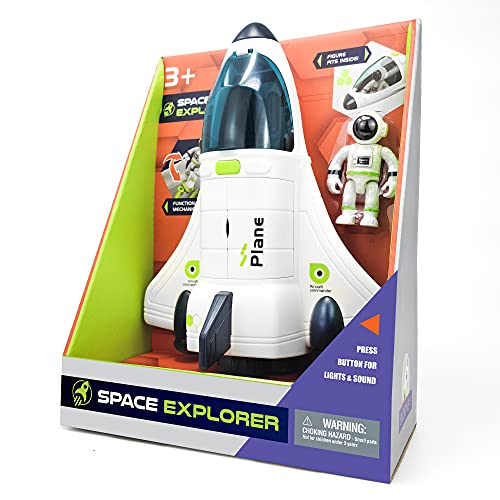
The BLOONSY Space Shuttle Toy introduces a multi‑sensory space adventure suitable for ages 3 to 7. This three‑wheeled model features an opening cockpit for an astronaut figure and a mechanical arm, enabling hands‑on exploration of space missions. The top action button triggers take‑off sounds and tail lights, creating an immersive pretend play environment that reinforces cause‑and‑effect learning. The toy’s durable construction supports outdoor use, while its compact size fits easily into playrooms.
Children can engage in dramatic narratives—piloting a shuttle, docking with space stations, or performing rescue missions—while practicing fine motor skills as they operate the cockpit and arm. The combination of sound, light, and physical play encourages sustained attention and helps develop planning abilities as kids map out simple missions before acting them out.
Buying Guide: Key Purchase Considerations
- Age appropriateness: Ensure the toy’s complexity matches a 3‑year‑old’s developmental level. Look for simple assembly, big pieces, and intuitive play patterns.
- Safety and materials: Prioritize non‑toxic paints, smooth edges, and durable construction. Wooden puzzles, fabric components, and soft foam are common safe choices for toddlers.
- Educational value: Choose toys that promote fine motor skills, problem solving, language development, and early science concepts without overwhelming screens.
- Imaginative play: Space themes that enable role‑play, storytelling, and mission planning support creativity and social interaction when used with others.
- Multi‑sensory elements: Toys with lights, sounds, textures, and movable parts engage attention and reinforce learning through different senses.
- Durability and storage: Consider size, weight, and ease of cleaning. Foldable tents, self‑contained sets, and wooden puzzles tend to last longer with younger children.
- Setup and portability: If space is tight, opt for compact items or ones that store neatly. For families on the go, portable play tents and lightweight kits are ideal.
- Gender and interests: All options here foster universal curiosity about space; personal preference may guide which one a child enjoys most (engineering, storytelling, or exploratory play).
How To Use These Toys Effectively
Integrate playtime with brief, guided storytelling to reinforce vocabulary and sequencing. For puzzle and build‑your‑rocket toys, start with a simple goal (e.g., “let’s assemble the rocket in the right order”) and gradually introduce more steps as confidence grows. For pretend play items like tents and space shuttles, rotate roles among siblings or caregivers to encourage cooperative play and social skills. Pair purchases with age‑appropriate space books or short science videos to deepen learning while keeping screen time in check.
Safety Considerations
Always supervise toddlers during assembly and play, especially with small parts. Verify that batteries and electronic components are securely enclosed, and check for any loose edges or detachable pieces that could pose a choking risk. Regularly inspect toys for wear and tear, replacing damaged items promptly to maintain a safe play environment.