In this guide
Discover engaging, age-appropriate STEM kits that help kids explore science, technology, engineering, and math through hands-on activities. The following selections emphasize creativity, problem solving, and real-world applications, making them great gifts for curious minds ages 6 and up.
The table below highlights five standout STEM kits chosen for broad appeal, educational value, and clear, project-based learning outcomes.
| Product | Brand | Key Focus |
|---|---|---|
| STEM Kits for Kids Crafts 6-8 8-12 | BeAndge | Robotics and hands-on building |
| Klutz Lego Gear Bots Science/STEM Activity Kit | Klutz | Kinetic engineering with LEGO Technic |
| National Geographic Break Open 10 Premium Geodes | Blue Marble | Geology and crystal discovery |
| Snap Circuits Classic SC-300 | Snap Circuits | Electrical circuits and circuitry projects |
| Snap Circuits Jr. SC-100 | Snap Circuits | Intro to electronics with 100+ projects |
Below you’ll find five curated product sections with concise overviews, image glimpses, and practical details to help families and educators choose the best fit for their budding scientists and engineers.
BeAndge STEM Kits For Kids Crafts

The BeAndge kit centers on interactive robot-building and creative science activities. It includes five distinct sets: a solar-powered car, a wind-powered car, an obstacle avoidance robot, a transmission tank, and a glider. While batteries are not included, the assortment supports independent exploration and family STEM time. It’s framed as a giftable option that also works well for classroom-based projects, encouraging young builders to experiment with energy conversion, motion, and basic robotics concepts.
Klutz Lego Gear Bots Science/STEM Kit

Klutz integrates LEGO Technic bricks with papercraft concepts to deliver eight physics-driven, kinetic creatures. The kit provides all required LEGO elements and a 64-page book of STEM content, including axles, cams, and cranks, along with step-by-step instructions. This blend of hands-on building and accessible theory makes it suitable for ages 8–12, encouraging engineering thinking and practical problem-solving as kids assemble and test their mechanical models.
National Geographic Break Open 10 Premium Geodes

Geology enthusiasts can break open natural geodes to reveal crystals inside. This National Geographic set emphasizes discovery and hands-on science as children crack rocks to observe crystals, with colorful variations enhancing the experience. The kit is well-suited for curious minds who enjoy tangible outcomes and bring the science fair to life with real specimens and display stands, underscoring careful observation and geology concepts in a playful context.
Snap Circuits Classic SC-300
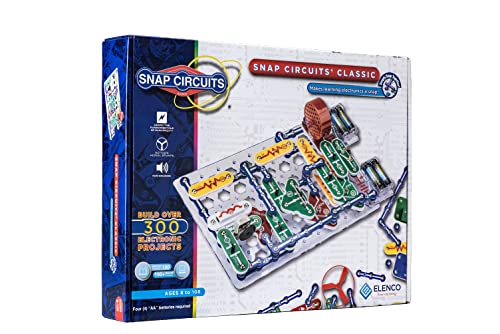
Snap Circuits Classic SC-300 offers more than 300 projects with a full-color manual. This kit introduces electrical engineering concepts in a safe, structured way, using modular parts to build projects like AM radios and doorbells. It’s designed for ages 8 and up and supports collaborative learning when multiple kids share components, making it a versatile option for classroom groups or family STEM evenings.
Snap Circuits Jr. SC-100

The Snap Circuits Jr. kit provides an approachable entry point with 100+ projects and 29 parts, helping younger learners (ages 8+) begin to understand circuitry, circuits, and basic electronics. The kit’s guided projects support incremental learning, from simple alarm setups to more creative devices, while remaining compact enough for quick setup and sharing among siblings or classmates.
Buying Guide
- Age appropriateness: Look for kits labeled for the intended age range. Some sets offer flexible difficulty levels through additional experiments or growth kits that expand as kids gain skill.
- Learning objectives: Consider whether the focus is on robotics, electronics, geology, or mechanical engineering. Choose kits that align with a child’s interests to sustain engagement.
- Hands-on value: Projects should be tangible with visible outcomes. Kits that support repeat experimentation and troubleshooting tend to deepen understanding.
- Safety and supervision: Ensure components are kid-friendly, with age-appropriate safety considerations. Some kits benefit from parental or teacher guidance for best results.
- Expansion potential: Some brands offer modular components or companion sets that extend learning beyond a single project, enabling ongoing exploration.
- Accessibility: Clear instructions, visual guides, and languages available in print or digital formats help learners of diverse backgrounds.
- Gift suitability: Gift-ready kits with attractive packaging and broad appeal generally perform well for holidays and birthdays.
Across these options, families can compare how each kit approaches core STEM concepts: robotics and mechanics (BeAndge, Klutz), geology and natural science (National Geographic), and electronics and circuitry (Snap Circuits lines). When selecting, consider whether you want a classroom-friendly set for group activities or a family project that supports one-to-one learning and shared problem solving.