In this guide
Finding the right toys for a 9-month-old can boost fine and gross motor skills, sensory exploration, and early problem-solving. The following selections prioritize safety, age-appropriate design, and developmental value. Each product below is linked to its Amazon listing for quick reference and purchase.
Summary of selected products:
| Product | Brand | Age Range | Key Benefit |
|---|---|---|---|
| Baby Montessori Sensory Toys for 0-6 6-12 Months | TOHIBEE | 0-18 months | Multi-sensory textures and rattle elements to foster grasping and exploration |
| Fisher-Price Stacking Toy Baby’s First Blocks | Fisher-Price | 6+ months | Colorful blocks for sorting, stacking, and shape recognition |
| VTech Sit-to-Stand Learning Walker | VTech | 6-18+ months | Motor skills and auditory play with a removable tray |
| Baby Toys 6-12 Months Soft Barn with Stuffed Animals | JOYSINTOY | 6-12 months | Montessori-inspired sensory play with crinkle and mirror |
| MINGKIDS Montessori Toys for 1 Year Old | MINGKIDS | 12+ months | Multi-sensory shapes that encourage color and shape recognition |
Baby Montessori Sensory Toys for 0-6 6-12 Months

This TOHIBEE sensory set targets early exploration with 12 bright colors and textured silicone balls. The rattle ring, twisting clicking ball, and rotating ball introduce varied tactile and auditory stimuli, ideal for a 9-month-old who is learning to reach, grasp, and manipulate small objects. The silicone teether element adds teething relief, making it a practical all-in-one toy for mobility and sensory development. Designed to be lightweight and easy to grasp, it supports gross motor progression as babies practice reaching and grabbing from different angles.
Chuya Teether Toy Chew Toys for Babies

Chuya’s teether rethinks the traditional teether with a TV remote shape that appeals to curious babies. Made from food-grade silicone, it withstands temperature variations and is easy to clean, satisfying early mouthing needs while assisting gum relief. It supports early recognition of colors and shapes as babies explore the device’s contours and textures. This toy is compact and portable, ideal for playtime on the floor, during travel, or as a soothing teething companion during dental stage transitions.
Fisher-Price Stacking Toy: Baby’s First Blocks

The Fisher-Price set includes 10 colorful blocks designed for sorting, stacking, and dropping through a shape-sorter lid. The blocks are sized for tiny hands, encouraging a baby’s early problem-solving skills and grasp development. A easy-carry handle makes it convenient for on-the-go play. This classic, durable toy supports cognitive development by teaching color differentiation, sequencing, and spatial awareness as infants explore how pieces fit together and fall through the sorter.
VTech Sit-to-Stand Learning Walker
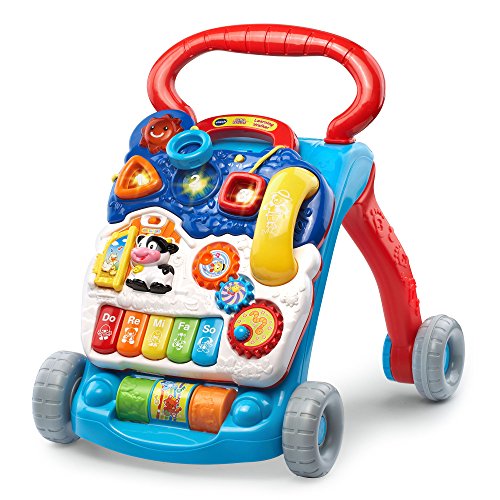
The VTech Sit-to-Stand Learning Walker is designed for babies who are starting to sit up and move around. Its detachable activity panel provides hands-on play, while five piano keys and a pretend phone introduce early auditory and role-play activities. The walker supports motor development with shape sorters, spinning rollers, and a light-up interface. This option helps transition from floor play to supported standing, encouraging mobility and exploration in a supervised setting.
Baby Toys 6-12 Months Soft Barn with Stuffed Animals
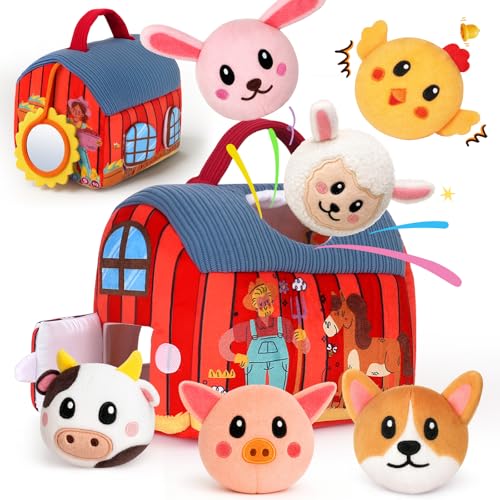
JOYSINTOY’s soft barn and stuffed animals offer a Montessori-inspired sensory experience with a rattle, crinkle paper, and a baby-safe mirror. The dual barn openings invite fill-and-dump play, supporting object permanence and cause-and-effect understanding. The set emphasizes independent play and tactile exploration, encouraging babies to reach for textures and visually track the mirror reflection. Its plush components reduce risk and emphasize safe play while promoting fine motor skills as babies manipulate the soft figures and barn doors.
MINGKIDS Montessori Toys for 1 Year Old

The MINGKIDS six-piece set provides multi-sensory shape activities designed to awaken curiosity and experimentation. The ABS plastic frame features rounded corners and smooth edges for safe handling. Each chunky block includes different textures, supporting tactile discrimination and fine motor skill development. This set helps introduce color and shape recognition while offering opportunities for babies to push shapes through elastic bands, reinforcing problem-solving and hand-eye coordination as they explore how pieces fit and move.
Buying Guide: Key Purchase Considerations
- Age appropriateness: Choose toys labeled for 6-12 months or 9-12 months to align with a child’s developmental stage. Multisensory options tend to support broader skill growth.
- Safety features: Look for BPA-free silicone, rounded edges, and no small detachable parts that pose choking hazards. Washable and durable materials are preferable for teething and mouthing.
- Motor skill support: Toys that encourage reaching, grasping, rolling, and standing assist gross and fine motor development. Consider items with varying textures to stimulate tactile exploration.
- Cognitive development: Toys that promote cause-and-effect learning, shape sorting, and color/shape recognition help early problem-solving and memory formation.
- Portability and storage: Lightweight, easy-to-clean options and those that store neatly or fit into a play tray are advantageous for travel and small living spaces.
- Maintenance: Check cleaning instructions; most silicone and plastic toys are dishwasher-safe or easy to wipe down, which is important for baby hygiene.
- Durability and value: Durable construction reduces replacement frequency. Sets that grow with a child’s age—expanding from 6 to 12 months—offer longer usage.
When selecting toys for a 9-month-old, aim for a balanced mix of sensory play (textures, sounds), fine motor tasks (grasp, squeeze, twist), and early cognitive activities (sorting, matching). The listed selections cover a range of activities and developmental keys while prioritizing safety and ease of use for caregivers. Each toy offers a unique pathway to exploration, learning, and playtime independence as infants begin more intentional movement and interaction.