In this guide
Finding engaging toys for a 7-year-old with Down syndrome involves balancing sensory needs, safety, and opportunities for learning and play. The following selections emphasize sensory engagement, fine motor development, balance, memory, and social interaction. Each item is chosen for its potential to support focus, calm, coordination, and joyful exploration.
| Product | Brand | Why It Helps | Link |
|---|---|---|---|
| Musical Light Up Wand | LoveHugs | Multi-sensory lights and a soothing melody support visual tracking, auditory cues, and calm engagement. | View |
| Liquid Motion Bubbler | Super Z Outlet | Slow-moving drops foster visual tracking and a relaxing rhythm that can aid focus and self-regulation. | View |
| Montessori Magnetic Wooden Puzzle | TMGOT | Color matching, fine motor control, and problem solving support cognitive development in a hands-on way. | View |
| Brain & Memory Game Cube | PlayRoute | Memory and concentration games with simple, engaging challenges that adapt to a child’s pace. | View |
| Pogo Trick Ball | Flybar | Active play builds balance, coordination, and gross motor strength in a child-friendly design. | View |
These selections balance sensory input with opportunities for independent and guided play. The table above summarizes why each toy can be meaningful for children around seven years old who navigate Down syndrome traits, while remaining safe and accessible for varying energy levels and attention spans.
Musical Light Up Wand For Sensory Play

The LoveHugs Musical Light Up Wand delivers a multi-sensory experience with spinning color-changing lights and a soothing musical melody. This combination supports visual tracking, auditory processing, and calm engagement. The wand’s rhythmic light show can captivate a child during quiet play or assist in transitions between activities, a common daily challenge for children with Down syndrome. The looping melody adds a predictable auditory cue that can help with attention and mood regulation. This toy is compact enough for easy handling while providing extended sensory stimulation.
Key features include a kaleidoscope of moving lights and an inviting music track designed to maintain interest without becoming overstimulating. It’s suitable for solo play or shared activities with a caregiver, enabling opportunities for guided interaction, turn-taking, and language modeling in a fun, non-pressured context.
Liquid Motion Bubbler For Sensory Play

The Super Z Outlet Liquid Motion Bubbler uses descending bubbles to create a slow, mesmerizing visual. Gravity guides the droplets along a gentle path, offering a predictable, repeatable motion that supports visual tracking and focus. When flipped over, the bubbles reappear for endless cycles of calm, soothing motion. This toy is often favored as a therapy tool or stress-relief toy, and its simple, repetitive action can be comforting for children who thrive on predictable sensory input. It also serves as a quiet, screen-free option for calm-down time.
In practice, caregivers may use the bubbler to prompt turn-taking during clean-up or transitions, encouraging verbal prompts or sign language cues alongside the activity. Durability and ease of cleaning are practical benefits for use at home or in a classroom setting.
Montessori Magnetic Wooden Color Puzzle

TMGOT’s wooden magnet puzzle targets color recognition, hand-eye coordination, and critical thinking. The set includes 16 wooden pieces, 20 double-sided cards, and a magnetic pen, which helps a child practice gripping and pen control while building pattern-matching skills. For children with Down syndrome, this activity supports fine motor development and cognitive sequencing in a tactile, constructive format. The puzzle is designed to be portable and lightweight, making it suitable for travel or quiet corners at home or school.
The activity encourages independent problem solving with gentle guidance. Its durable wooden construction offers a safe and tangible way to explore color relationships and spatial awareness. Repetition helps reinforce learning, and the open-ended nature supports ongoing engagement as skills progress.
Brain & Memory Game Cube
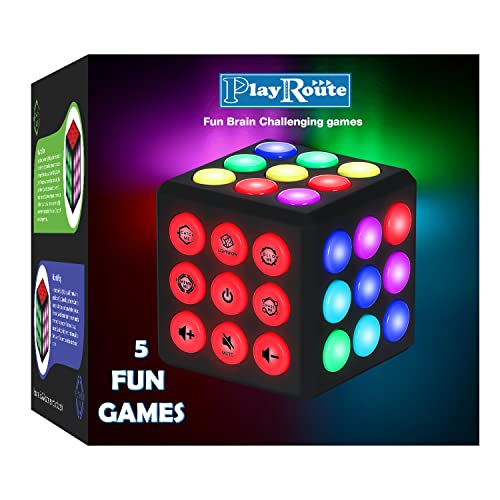
The PlayRoute Electronic Brain & Memory Game Cube provides five games that focus on light, memory, and cognitive challenge. This compact handheld device supports visual attention, pattern recognition, and reaction time, which can be beneficial for executive function development. It’s a suitable travel companion or classroom toy, enabling short, structured sessions that align with a child’s attention span. The games are designed to be accessible and engaging for a range of ages, including 7-year-olds, and can be enjoyed with family during cooperative play.
For children with Down syndrome, the cube’s clear, bright interface and straightforward objectives help minimize frustration while promoting persistence. The portability allows caregivers to tailor play to daily routines, offering quick cognitive boosts during transitions or waiting periods.
Flybar Pogo Trick Ball

The Flybar Pogo Trick Ball invites active play that supports balance, coordination, and core strength. With a durable deck and a comfortable handle, it’s designed for indoor or outdoor use and supports weight up to 160 pounds. This toy encourages gross motor development through bouncing and controlled movement, a beneficial activity for children who benefit from movement to regulate energy and attention. The pogo experience can also be shared with a caregiver or peer, fostering social interaction and turn-taking skills during play.
Ease of use and safety features, such as non-slip surfaces, make this a practical choice for younger children who need steady footing and a controlled bounce. It offers a physical outlet that can reduce restlessness and improve overall focus when integrated into a regular play routine.
Buying Guide: Key Purchase Considerations and Comparisons
- Sensory needs and safety: Look for toys with gentle, predictable stimuli and non-toxic materials. Avoid overstimulating features that may cause distress or fatigue.
- Motor skill development: Choose items that support both fine motor skills (puzzles, magnetic pieces) and gross motor skills (pogo activities, ball games). A mix helps build comprehensive motor planning.
- Cognitive engagement: Games that encourage memory,pattern recognition, and sequencing can align with school readiness objectives while providing meaningful challenge at the child’s pace.
- Transition and routine support: Toys with predictable loops (repeating melodies, repeating motions) can help with transitions between activities and reduce anxiety.
- Portability and space: Consider the child’s typical play environment. Compact, travel-friendly toys are useful for classrooms or car rides; larger items suit a dedicated play space.
- Social interaction: Select toys that offer cooperative play possibilities or shared activities with caregivers, siblings, or peers to foster communication and social skills.
- Durability and maintenance: Choose durable materials that are easy to clean and safe for frequent handling. This is especially important for busy households or classrooms.
- Progression: Varied levels of challenge allow a child to grow with the toy over time, from simple puzzles to more complex memory games as skills advance.
When selecting toys for a 7-year-old with Down syndrome, use a combination of sensory, cognitive, and motor-focused options. Monitoring responses and adjusting play routines based on energy, mood, and interest ensures that play remains enjoyable and beneficial. Aligning toys with daily routines—homework breaks, after-school wind-down, or therapy-like play sessions—helps maximize developmental gains while keeping activities engaging for the child.